Professional clients and eligible counterparties only. Compute contracts are not yet available and are subject to regulatory approval.

Launching, subject to regulatory approval

GPU compute futures, coming to an EU multilateral trading facility.

Five-year timed perpetual futures on NVIDIA H100, H200, B200 and B300 capacity. Settle in cash or take delivery of verified GPU nodes. Prices reference the Compute Desk GPU rental indices. Trading is planned to take place on the MiFID II multilateral trading facility operated by PM MTF Ltd, subject to regulatory approval.

Compute Desk index levels as displayed on 2 Nov 2026 [index date: 16 Oct 2026, to be confirmed] Illustrative, not live quotes

USD per GPU-hour · US one-year rental

  • DESKH100 NVIDIA H100 2.92 +11.5% 90d
  • DESKH200 NVIDIA H200 3.51 +11.4% 90d
  • DESKB200 NVIDIA B200 5.64 +13.0% 90d
  • DESKB300 NVIDIA B300 7.52 +41.4% 90d

Levels as displayed on compute-desk.com on 2 November 2026. Not a trading price and not a forecast. DESKH100 is calculated and published by General Index; DESKH200, DESKB200 and DESKB300 by Compute Desk (The Compute Index, Inc.). [Display licence to be confirmed.]

  • Operator Operated by PM MTF Ltd, a Cyprus investment firm operating a MiFID II multilateral trading facility [client to confirm wording and that the authorisation covers operation of an MTF]
  • Index & physical settlement In partnership with Compute Desk: reference indices, and delivery verified through COMPUTE Clear
  • Access Professional clients and eligible counterparties only. Not available to retail clients
  • Structure Five-year timed perpetual futures, cash-settled or physically delivered

01 Contracts

Four GPUs. Two ways to settle.

Each GPU model is listed in a cash-settled and a physically delivered version, so there are eight instruments in all. You can choose pure price exposure, or a contract that can end in real, verified capacity.

Settlement variant to show

Instrument codes and terms are indicative and subject to regulatory approval.

NVIDIA Hopper

H100

Deliverable grade (indicative) 80 GB HBM3 · SXM 8‑GPU HGX node

Hopper-generation capacity, priced against the H100 benchmark. Hedge it in cash, or settle into verified 8-GPU HGX nodes.

Cash-settled

CMH100C

Funding and final settlement in cash against DESKH100.

Physically delivered

CMH100P

Monthly delivery of verified HGX H100 nodes through COMPUTE Clear. Funding against DESKH100.

Reference index
DESKH100
Contract unit
5,840 GPU-hours
Illustrative notional
USD 17,052.80

NVIDIA Hopper

H200

Deliverable grade (indicative) 141 GB HBM3e · SXM 8‑GPU HGX node

The Hopper footprint with 141 GB of HBM3e per GPU. Manage exposure to memory-heavy inference capacity, cash-settled or delivered.

Cash-settled

CMH200C

Funding and final settlement in cash against DESKH200.

Physically delivered

CMH200P

Monthly delivery of verified HGX H200 nodes through COMPUTE Clear. Funding against DESKH200.

Reference index
DESKH200
Contract unit
5,840 GPU-hours
Illustrative notional
USD 20,498.40

NVIDIA Blackwell

B200

Deliverable grade (indicative) c. 180 GB HBM3e · SXM 8‑GPU HGX node

Blackwell capacity on a five-year series. Hedge the cost or the revenue of B200 GPU-hours against the B200 benchmark.

Cash-settled

CMB200C

Funding and final settlement in cash against DESKB200.

Physically delivered

CMB200P

Monthly delivery of verified HGX B200 nodes through COMPUTE Clear. Funding against DESKB200.

Reference index
DESKB200
Contract unit
5,840 GPU-hours
Illustrative notional
USD 32,937.60

NVIDIA Blackwell Ultra

B300

Deliverable grade (indicative) Up to 288 GB HBM3e · SXM 8‑GPU HGX node

The newest GPU in the set. Manage exposure to Blackwell Ultra capacity before you commit capital.

Cash-settled

CMB300C

Funding and final settlement in cash against DESKB300.

Physically delivered

CMB300P

Monthly delivery of verified HGX B300 nodes through COMPUTE Clear. Funding against DESKB300.

Reference index
DESKB300
Contract unit
5,840 GPU-hours
Illustrative notional
USD 43,916.80

The deliverable grade applies to the physically delivered series. The reference GPU variant of each index is set by Compute Desk’s index specification and may differ from the deliverable grade.

All eight instruments

Each series takes a maturity suffix, for example CMH100C-[YYMM]. Normally one series per instrument is listed. During the final [12] months, the successor series trades alongside the maturing series so that positions can be rolled. One contract is one 8-GPU node for 730 hours (5,840 GPU-hours). Notionals use the illustrative index levels displayed on 2 Nov 2026.

About the reference indices. Each Compute Desk index is a daily benchmark of the prevailing US price for a one-year reserved rental of one NVIDIA GPU, in USD per GPU-hour. Under Compute Desk’s published methodology it combines completed transactions with published neocloud list prices (hyperscaler list prices are excluded), adjusts observations to a reference GPU and contract term, and smooths the result. Daily values are calculated at 16:30 New York time on US business days. Index methodology (opens in a new tab)

Compute Markets instruments by GPU model and settlement variant (indicative codes)
GPU Cash-settled Physically delivered Reference index Index calculated and published by
NVIDIA H100CMH100CCMH100PDESKH100General Index
NVIDIA H200CMH200CCMH200PDESKH200Compute Desk
NVIDIA B200CMB200CCMB200PDESKB200Compute Desk
NVIDIA B300CMB300CCMB300PDESKB300Compute Desk

Under consideration for later phases (subject to demand, the availability of a suitable reference index and regulatory approval): rack-scale NVIDIA GB200 and GB300 NVL72 systems, AMD Instinct accelerators, and region-specific delivery. No further contracts are committed at this stage.

02 How it works

A perpetual that knows when it ends.

A timed perpetual trades like a perpetual future. There are no monthly expiries to roll, and a daily funding payment keeps the price close to the index. Each series also has a fixed final maturity five years after listing, so every position has a defined end date.

  1. No monthly roll

    One series per GPU and settlement variant runs for five years. For most of a series’ life, liquidity is concentrated in one order book per instrument instead of being spread across a strip of expiries.

  2. Daily funding anchors the price

    Once per business day, the average futures price is compared with the latest published Compute Desk index value. When futures trade above the index, longs pay shorts. When they trade below, shorts pay longs. The rate is capped at ±0.50% per day indicative.

  3. A fixed final maturity

    Each series matures on the [last business day] of the 60th month after listing. Open positions then settle in cash against the average of the final [5] index values, plus a final funding payment. A successor series is listed [12] months before maturity so positions can be rolled in an orderly way.

  4. It tracks today’s index

    A timed perpetual tracks the current level of the index. It does not lock in a price for a future date. Over time, funding payments can be material, and they belong in any hedging calculation.

How a five-year timed perpetual behaves over its life Illustrative chart. Over five years from listing, the futures price moves above and below the Compute Desk index. When it is above (a premium), longs pay funding to shorts; when it is below (a discount), shorts pay longs. A successor series is listed about a year before maturity, and at the fixed final maturity in year five open positions are settled in cash against the index. Short ticks along the bottom mark the monthly delivery cycles of the physically delivered series.

Illustrative. Not based on market data.

  • Futures price
  • Compute Desk index
  • Premium: longs pay shorts
  • Discount: shorts pay longs
  1. 1Futures above the index: daily funding flows from longs to shorts.
  2. 2Futures below the index: funding flows from shorts to longs.
  3. 3The successor series is listed ahead of maturity indicative: 12 months.
  4. 4Final maturity: open positions settle in cash against the index.
  5. 5Physically delivered series: monthly delivery cycles throughout the life of the series.
Longs

Futures above index

Futures below index

Shorts

Funding is paid between members holding opposite positions. It is not a fee to the venue. It is settled once per business day as a cash adjustment, separately from variation margin.

The funding formula indicative

Premium
(Average futures price in funding window − Index) ÷ Index
Funding rate
Premium, capped at ±0.50% per business day
Funding per contract
Funding rate × Daily settlement price × 5,840

A positive rate means longs pay shorts; a negative rate means shorts pay longs. “Index” is the most recent index value published before the funding window, normally the previous US business day’s 16:30 New York value. On days with no new index value, the last published value is used [to be confirmed in the Rulebook]. The futures price is sampled every minute in a published funding window [times to be confirmed], using the last trade where it lies within the best bid and offer and the mid-price otherwise. Minutes without a two-sided market are excluded.

Worked example illustrative, not a forecast

Worked funding example for one H100 contract
Index, DESKH100 (as displayed on 2 Nov 2026)2.920
Average futures price, funding window2.9215
Premium = (2.9215 − 2.920) ÷ 2.920+0.0514%
Daily settlement price2.922
Funding per contract = 0.000514 × 2.922 × 5,840USD 8.77
10 contractsLong pays USD 87.70 Short receives USD 87.70

If the average futures price were 2.940, the premium would be +0.685%, so the cap applies and the rate is +0.50%. At a settlement price of 2.941, that is USD 85.88 per contract. Variation margin is separate: if the settlement price rises from 2.922 to 2.937, a 10-contract long receives 0.015 × 5,840 × 10 = USD 876.00.

03 Calculator

Size a position.

Convert between GPUs and contracts, see the notional, and estimate the funding paid or received on a position. The calculator uses the indicative contract terms and the illustrative index levels displayed on 2 Nov 2026.

GPU model
Settlement variant
Position

1 contract = 8 GPUs × 730 hours. GPU quantities must be multiples of 8.

Prefilled with the illustrative index level.

One interval = one business day (indicative). Positive: longs pay shorts. Indicative cap ±0.50%.

Cash-settled CMH100C vs DESKH100
Contracts
10
GPUs
80
GPU-hours per 730-hour period
58,400
Notional
USD 170,528.00
Funding per interval
USD 87.70 paid by your long position
USD 8.77 per contract
Funding, annualised 250 funding days, constant rate
USD 21,925.00 · 12.86% of notional
Tick value USD 0.001 per GPU-hour
USD 5.84 / contract · USD 58.40 / position
Value of a USD 0.01 move
USD 584.00

Illustrative only. Based on indicative terms: 5,840 GPU-hours per contract, a USD 0.001 tick and daily funding capped at ±0.50%. Funding per contract is rounded to the cent. This is not a quote, forecast or offer, and it excludes fees, margin and clearing costs.

04 Physical delivery

From a position to a running node.

Holders of the physically delivered contracts can settle some or all of a position by delivery of real GPU capacity in monthly cycles. Capacity is delivered and verified through COMPUTE Clear, the physical settlement service operated by Compute Desk. It checks that the hardware delivered matches the contract specification.

Indicative. Delivery arrangements are subject to the Compute Markets Rulebook, regulatory approval and final agreement with Compute Desk.

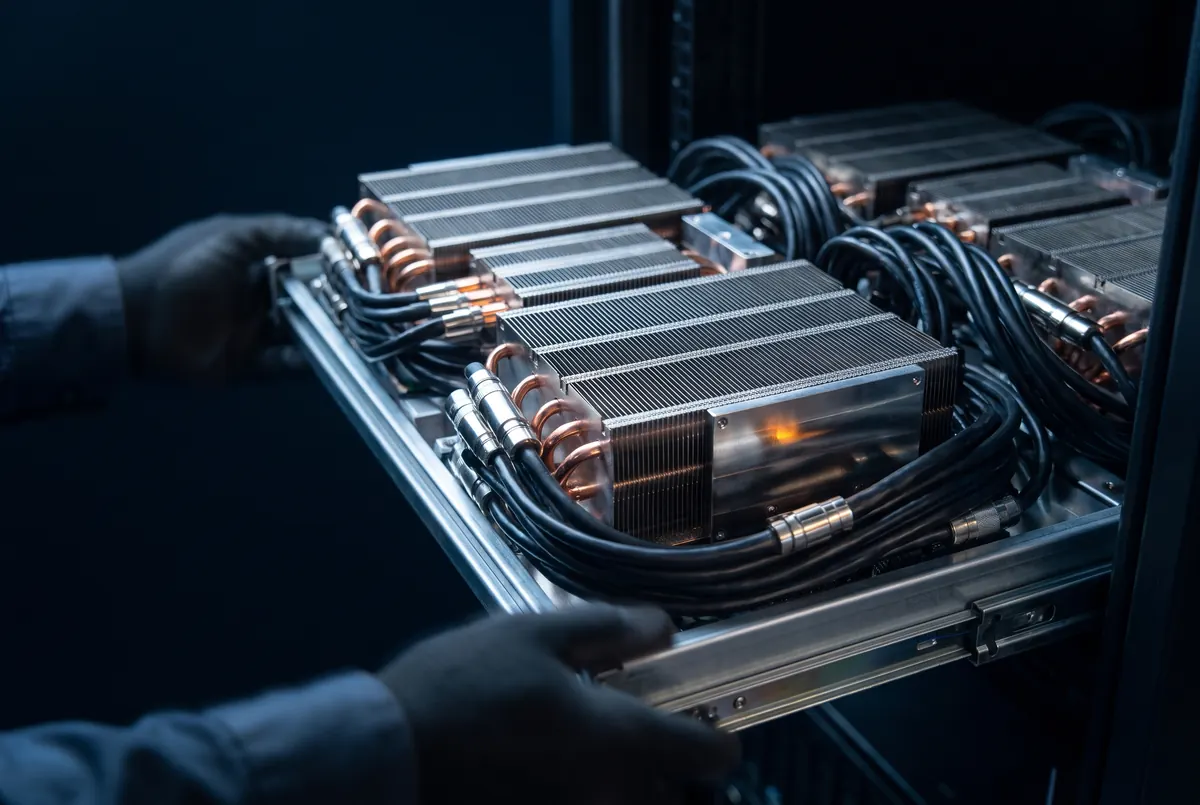
Close-up of a GPU server tray being guided along its rails into a rack by gloved hands, with finned heatsinks, copper heat pipes and bundled high-speed cables under cool blue light.
  1. 01

    Nominate

    In each monthly cycle’s nomination window [dates to be confirmed], longs nominate to take delivery and shorts nominate to make delivery, in whole contracts. Delivering members register their 8-GPU nodes with COMPUTE Clear in advance.

  2. 02

    Match

    Nominations are matched [pro rata]. If they do not balance, the imbalance is published and eligible members can cover it in a balancing window. Matched positions close at the delivery price [definition to be confirmed, e.g. the daily settlement price on the matching day]. Unmatched nominations lapse and the positions stay open.

  3. 03

    Verify hardware

    COMPUTE Clear checks that the hardware made available matches the contract specification for the series before delivery is confirmed.

  4. 04

    Provision

    The seller makes the allocated nodes available to the buyer through COMPUTE Clear. [Access model, e.g. bare-metal or single-tenant: to be confirmed.]

  5. 05

    Deliver & settle

    Each contract delivers 730 consecutive hours of capacity from [delivery start]. The buyer’s payment is released to the seller against verified delivery [payment and settlement agent to be confirmed]. Remedies for partial or failed delivery are set out in the Rulebook.

Deferral fee indicative [0.25%] of notional per cycle. When nominations to take delivery exceed nominations to make delivery, open short positions pay a deferral fee to open long positions. When the reverse is true, longs pay shorts. Positions created by balancing nominations receive the fee.

Indicative deliverable grade

One contract delivers one 8-GPU node for 730 hours. The final grade, substitution and tolerance rules, acceptance tests and delivery locations will be set out in the contract specifications and the MTF Rulebook.

Indicative deliverable grade per GPU model, physically delivered series
GPU Node GPU memory GPU interconnect Network fabric per GPU Facility
H100 NVIDIA HGX H100, 8 × SXM 80 GB HBM3 4th-gen NVLink via NVSwitch, 900 GB/s per GPU ≥ 400 Gb/s, InfiniBand NDR or RoCE, 1:1 GPU‑to‑NIC Tier III-equivalent¹
H200 NVIDIA HGX H200, 8 × SXM 141 GB HBM3e, 4.8 TB/s NVLink via NVSwitch, 900 GB/s per GPU ≥ 400 Gb/s, 1:1 GPU‑to‑NIC Tier III-equivalent¹
B200 NVIDIA HGX B200, 8 × SXM c. 180 GB HBM3e (c. 1.44 TB per node) 5th-gen NVLink, 1.8 TB/s per GPU ≥ 400 Gb/s, 1:1 GPU‑to‑NIC Tier III-equivalent¹; power and cooling for c. 14 kW‑class nodes
B300 NVIDIA HGX B300, 8 × SXM (Blackwell Ultra) Up to 288 GB HBM3e (at least 2.1 TB per node) 5th-gen NVLink, 1.8 TB/s per GPU ≥ 800 Gb/s (ConnectX-8 class), 1:1 GPU‑to‑NIC Tier III-equivalent¹
  • All grades: host CPU, RAM, local storage, access model, delivery location and availability service level: [to be confirmed].
  • ¹ Uptime Institute Tier III or EN 50600 Availability Class 3 or higher.
  • The reference indices measure US one-year rental prices. Where delivery takes place outside the US, delivery-location basis terms will be specified. [Delivery locations: to be confirmed.]
  • COMPUTE Clear’s role is limited to delivering and verifying capacity. It is not a central counterparty. [Clearing and margining arrangements: to be confirmed.]

05 Participants

Built for both sides of the compute economy.

The firms that build, finance, consume and price GPU capacity all carry exposure to the same rental curve. A venue only works when these natural hedgers meet professional liquidity providers on equal terms.

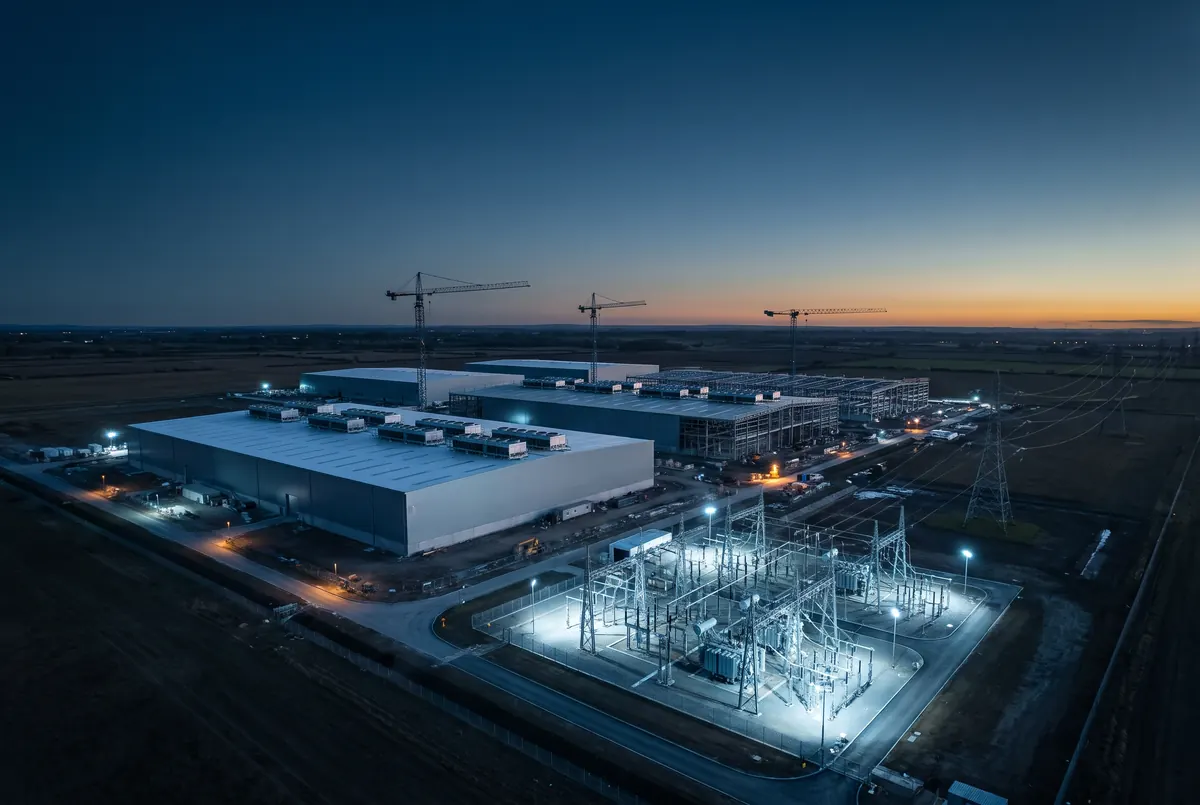
Aerial view at dusk of a large data-centre campus under construction, with rooftop cooling units, steel frames, tower cranes and a floodlit electrical substation in the foreground.

A Lenders and underwriters

Finance GPU fleets against a published reference.

Banks and debt funds financing GPU fleets and data centres, equipment lessors, the sponsors behind them, and firms underwriting compute-backed risk.

The exposure
GPU-backed loans are serviced from rental income that moves with market prices, and the value of the collateral moves with it.
How the contract helps
Mark compute-backed collateral to a published benchmark and hedge the rental income behind the debt, usually in the cash-settled contract with no hardware to handle.
Example illustrative
A lender wants to hedge one year of rental income from 64 B200 GPUs (560,640 GPU-hours) and holds a short position of about 96 CMB200C contracts. The position gains if the index falls. Funding, and basis to the borrower’s actual contracts, remain.

Cash-settled

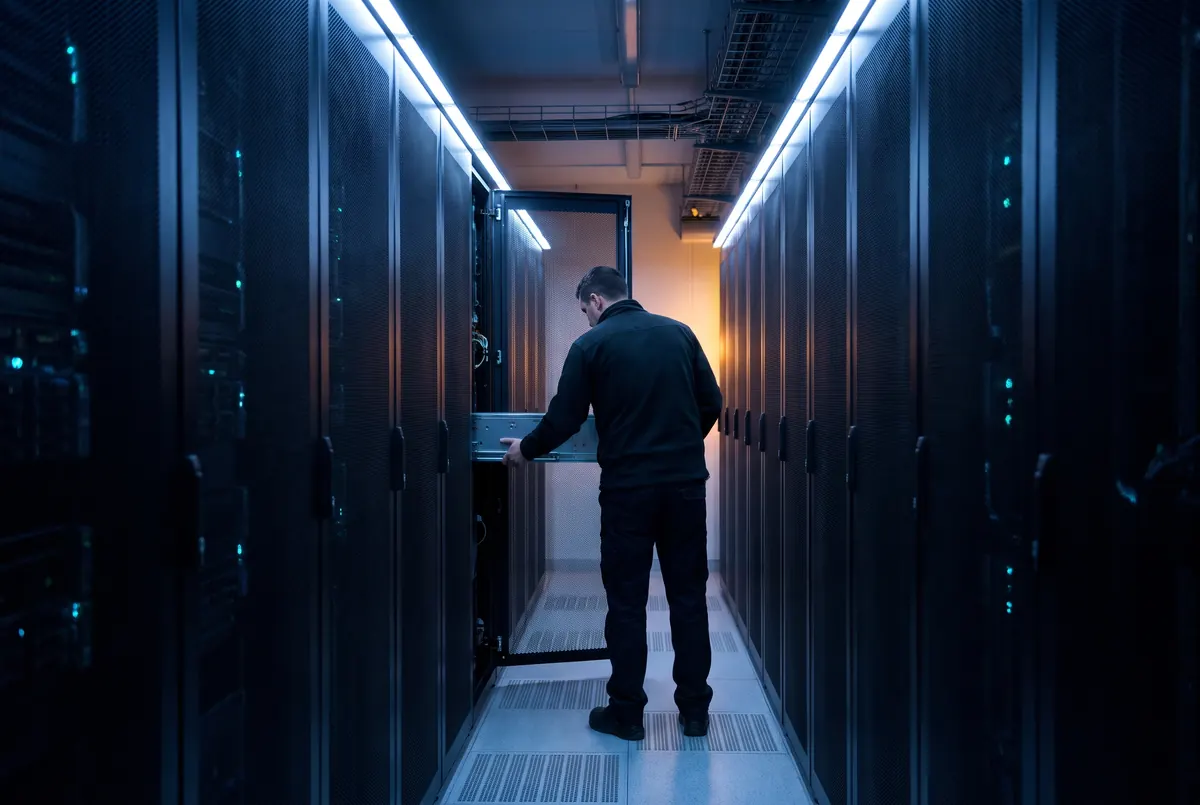
A technician, seen from behind, slides a server into an open rack in a data-centre aisle lined with dark cabinets and small cyan status lights.

B Compute sellers

Hedge the price of capacity you are bringing online.

Data-centre and colocation operators, cloud GPU platforms and firms reselling reserved capacity.

The exposure
Capital is committed long before capacity earns, and rental prices for each generation can fall as newer hardware arrives.
How the contract helps
Sell GPU-hours against the reference price to support revenue ahead of a build-out. With the physically delivered contract, meet the position by delivering verified nodes.
Example illustrative
A provider bringing 128 H200 GPUs online sells 16 CMH200P contracts. It can nominate to deliver 16 verified 8-GPU nodes in a monthly cycle, or close the position for cash.

Cash-settled Physically delivered

Abstract close-up of bundled fibre-optic cables curving through darkness, with points of cyan light along the fibres and at the connector ends.

C Compute buyers

Budget compute like any other critical input.

Model developers, software companies running inference at scale, and corporate AI and research teams.

The exposure
Training and inference roadmaps depend on GPU rental prices that can move sharply between budget cycles.
How the contract helps
Hedge the cost of future GPU-hours against the index, or take delivery of real capacity through the physically delivered contract.
Example illustrative
A team planning for 256 B300 GPUs buys 32 CMB300P contracts and nominates to take delivery of 32 verified nodes in the cycle it needs them. Alternatively, it holds CMB300C as a pure price hedge alongside existing supply contracts.

Cash-settled Physically delivered

Abstract long-exposure light trails in blue-white, cyan and amber, flowing in gentle curves above dark glass.

D Professional trading firms

A new curve to price.

Proprietary trading houses, electronic liquidity providers, and discretionary or systematic funds active in commodity and macro markets.

The exposure
GPU rental is a large, fast-moving price with natural hedgers on both sides and few listed instruments.
How the contract helps
Quote and trade four GPU models across two generations and two settlement types in order books with non-discretionary rules, on a venue open only to professional counterparties.
Example illustrative
Relative value between models and generations, such as long CMH200C against short CMH100C, or long CMB200C against short CMH100C; basis between cash-settled and physically delivered series; or liquidity provision under a market-making arrangement [terms to be published].

Cash-settled Physically delivered
Examples are illustrative, not recommendations. Firms that are not authorised under MiFID II should take their own advice on whether they need authorisation, or can rely on an exemption, before trading on their own account.

06 Specifications

Indicative contract terms.

The two settlement variants share one contract design. They differ only in how a position can end. Every term below is indicative and is not available for trading.

Indicative contract specifications, cash-settled and physically delivered variants
Term Cash-settled Physically delivered

Contract typeTimed perpetual future: perpetual-style daily funding, with a fixed final maturity for each series
UnderlyingNVIDIA H100, H200, B200 and B300 GPU capacity
Instrument codesCMH100C · CMH200C · CMB200C · CMB300CCMH100P · CMH200P · CMB200P · CMB300P
Series codeInstrument code plus maturity suffix, e.g. CMH100C-[YYMM]
Reference indexDESKH100 · DESKH200 · DESKB200 · DESKB300: Compute Desk daily US one-year rental price per GPU-hour
Use of the indexFunding and final settlementFunding, and final settlement of positions not settled by delivery
Contract unit5,840 GPU-hours: one 8-GPU node for 730 hours
Price quotationUSD per GPU-hour, to three decimal places
Minimum price incrementUSD 0.001 per GPU-hour = USD 5.84 per contract
Minimum order size1 contract (8 GPUs)
Trading hours[To be confirmed]
Daily settlement priceVolume-weighted average price in the closing window [15:45–16:00 CET/CEST]; fall-backs set out in the Rulebook
FundingOnce per business day. Rate = (average futures price over the funding window − index) ÷ index, capped at ±0.50% [product-specific]. Positive: longs pay shorts. Negative: shorts pay longs
Index value used for fundingThe most recent index value published before the funding window, normally the previous US business day’s 16:30 New York value. On days with no new index value, the last published value is used [to be confirmed in the Rulebook]
Variation marginDaily, in USD; funding settled as a separate cash adjustment in the same cycle
Clearing and margin[Arrangement to be confirmed]
Series and maturityNormally one series per instrument. Final maturity on the [last business day] of the 60th month after listing. During the final [12] months, the successor series trades alongside the maturing series so that positions can be rolled
Physical deliveryNot applicableMonthly cycles: 730 consecutive hours of verified 8-GPU capacity per contract, through Compute Desk COMPUTE Clear
Delivery priceNot applicablePrice at which matched positions close for delivery [definition to be confirmed, e.g. the daily settlement price on the matching day]
Deferral feeNot applicableIndicative [0.25%] of notional per cycle, paid to the side whose delivery nominations are not met
Final settlementCash, against the average of the final [5] published index values, plus a final funding paymentAs cash-settled, for any positions remaining after the last delivery cycle
Position managementVenue position management controls apply. EU commodity-derivative position limits and position reporting may apply [under review]
Fees[To be published]

Indicative terms. Final specifications are set out in the MTF Rulebook and contract specifications and are subject to regulatory approval.

07 Why an EU MTF

European market rules for a new market.

Compute Markets is designed to run on the multilateral trading facility operated by PM MTF Ltd under MiFID II. The venue’s rules are written down, published, and applied to every member in the same way.

  • Non-discretionary rules

    Orders will interact under published, non-discretionary rules. The operator may not trade against members’ orders with its own capital.

  • Objective admission

    Membership criteria are transparent, non-discriminatory and based on objective criteria, and will be published in the Rulebook.

  • Pre- and post-trade transparency

    Quotes and trades are made public under MiFIR, subject to any waivers and deferrals that apply.

  • Market surveillance

    Arrangements to monitor orders and trades, and to detect and report suspected market abuse under the Market Abuse Regulation (MAR).

  • Professional-only access

    Open to professional clients and eligible counterparties. Retail clients are not admitted.

  • EU legal framework

    A Cyprus investment firm supervised by the Cyprus Securities and Exchange Commission, within the EU single rulebook: MiFID II, MiFIR, MAR and, where applicable, EMIR. [client to confirm wording and that the authorisation covers operation of an MTF]

08 Membership

Becoming a member.

Access to the venue is governed by transparent, non-discriminatory rules based on objective criteria, which will be published in the Rulebook [link when available]. Members must qualify as professional clients or eligible counterparties.

Who can apply

Investment firms, credit institutions and other firms that:

  • are of sufficient good repute;
  • have sufficient trading ability, competence and experience;
  • have adequate organisational arrangements, where applicable; and
  • have sufficient resources for their role, including to meet margin, funding and settlement obligations.

Firms that are not authorised under MiFID II should take their own advice on whether they need authorisation, or can rely on an exemption, before trading on their own account. [Eligible jurisdictions, including the position of US persons, are subject to legal review.]

How admission works indicative

  1. 1
    Enquiry. Send us the form below. We aim to reply within [x] business days.
  2. 2
    Information pack. Draft Rulebook, access criteria, indicative contract terms and technical documentation [under NDA where required].
  3. 3
    Due diligence and eligibility. Know-your-customer and anti-money-laundering checks, ownership and control, sanctions screening, client category, good repute, competence, organisation and controls, and financial resources. Members intending to deliver capacity also register it with COMPUTE Clear.
  4. 4
    Membership agreement. Signature of the membership agreement, acceptance of the Rulebook, clearing and settlement arrangements, and appointment of authorised traders.
  5. 5
    Connectivity and conformance testing. Test environment access, API certification, and tests of pre-trade risk limits, kill switch and any trading algorithms.
  6. 6
    Admission. We confirm admission in writing. Trading can begin only once the compute contracts have been approved and launched.

Membership enquiry

Request membership information

Tell us about your firm and the contracts you are interested in. We will send the information pack and explain the next steps.

  • Takes about three minutes
  • No identity documents or financial data at this stage
  • We use your details to respond to your enquiry and as described in our privacy notice

Prefer email? membership@computemarkets.eu placeholder

You and your firm

Country of incorporation.

Please use your business address.

Include the country code, e.g. +357.

20 characters, letters and digits (ISO 17442). Spaces are ignored.

Your profile

Under MiFID II. See the FAQ for a summary.

Settlement interest required
Contracts of interest optional

1 contract = 5,840 GPU-hours (indicative).

Maximum 2,000 characters. Please do not include sensitive personal data.

Declarations

We use your details to respond to your enquiry and as described in our privacy notice. Compute contracts are not yet available and are subject to regulatory approval. Submitting this form does not create a right to membership or to trade.

09 FAQ

Questions, answered.

If your question is not covered here, include it in your membership enquiry.

What is a timed perpetual future?

A timed perpetual future works like a perpetual future. There is no monthly roll, and a daily funding payment between buyers and sellers keeps the futures price close to the Compute Desk index. Unlike a true perpetual, each series has a fixed final maturity five years after listing. At maturity, open positions settle in cash against the index, and a successor series is listed in advance so that positions can be rolled.

A timed perpetual tracks the current level of the index. It does not lock in a price for a future date.

How does funding work?

Once per business day, the average futures price over a published funding window is compared with the most recent index value published before the funding window, normally the previous US business day’s 16:30 New York value. On days with no new index value, the last published value is used [to be confirmed in the Rulebook]. The difference, as a percentage of the index, is the funding rate, capped at ±0.50% indicative. Funding per contract is the rate × the daily settlement price × 5,840 GPU-hours. A positive rate means longs pay shorts, and a negative rate means shorts pay longs. Funding is exchanged between members and is settled as a cash adjustment separate from variation margin. See the worked example.

What is the difference between cash-settled and physically delivered contracts?

Both share the same contract unit, funding mechanism and five-year maturity. A cash-settled contract only ever settles in money, against the index. A physically delivered contract also allows holders to settle some or all of a position by delivery of real GPU capacity in monthly cycles: 730 consecutive hours of a verified 8-GPU node per contract, delivered and verified through Compute Desk COMPUTE Clear. Any positions remaining at maturity settle in cash.

Who provides the reference index?

The contracts reference the Compute Desk GPU rental price indices: DESKH100, DESKH200, DESKB200 and DESKB300. Each measures the US price of a one-year reserved rental of one NVIDIA GPU, in USD per GPU-hour, and is calculated daily. DESKH200, DESKB200 and DESKB300 are calculated and published by Compute Desk (The Compute Index, Inc.). DESKH100 is calculated and published by General Index. The methodology is published at compute-desk.com/index-methodology (opens in a new tab).

Because the indices measure US one-year rental prices, they can differ from the price of the capacity a member actually buys, sells or delivers. See the risk disclosure.

Who can become a member?

Investment firms, credit institutions and other firms that meet the published access criteria (good repute, trading competence, adequate organisation and sufficient resources) and qualify as professional clients or eligible counterparties under MiFID II.

Professional clients include, in summary, regulated financial firms; large companies meeting at least two of a EUR 20 million balance sheet, EUR 40 million net turnover and EUR 2 million own funds; governments, central banks and supranational institutions; other institutional investors whose main activity is investing in financial instruments; and clients who ask to be treated as professional and pass the required assessment.

Eligible counterparties are a narrower group of financial institutions and public bodies, such as investment firms, credit institutions, insurers, UCITS and pension funds and their managers, national governments and central banks. This summary is for information only, and your firm is responsible for confirming its own classification.

Is Compute Markets available to retail clients?

No. Compute Markets is for professional clients and eligible counterparties only. It is not intended for retail clients, and retail clients must not rely on this website.

When will the contracts launch?

The compute contracts are forthcoming. Their admission to trading is subject to regulatory approval, and no launch date can be confirmed at this stage. [Target launch window: to be confirmed.] If you ask for launch updates in the membership enquiry form, we will keep you informed.

What are the fees?

[Fee schedule to be published.] Trading, membership, connectivity and any delivery-related fees will be set out in a published fee schedule before launch.

How will members connect?

[Connectivity and API documentation to be published.] Admission includes access to a test environment and conformance testing of API connectivity, pre-trade risk limits, the kill switch and any trading algorithms.

How are the contracts cleared and margined?

Under the indicative terms, positions are subject to daily variation margin in USD, and daily funding is settled as a separate cash adjustment. The clearing and margining arrangement, including any central counterparty, is [to be confirmed] and will be set out in the Rulebook. The venue operator does not act as counterparty to members’ trades. COMPUTE Clear is a delivery and verification service, not a central counterparty.

Do non-financial firms need to be authorised to trade?

Possibly. Firms that deal on their own account as members of an MTF may need authorisation under MiFID II unless an exemption applies, for example for trades that objectively reduce commercial risk or under the ancillary-activity exemption. Please take your own legal advice. We will check authorisation or exemption status during due diligence.